
Stanly County Arrest Records and Court Charges
Arrest records in Stanly County begin on the law-enforcement side. They can reflect a stop, arrest, booking event, custody status, or charge information tied to a person held by the Stanly County Sheriff's Office. The sheriff's public tools include the jail roster, Most Wanted, tips, crash reports, sex offender links, and the official Stanly County Sheriff's Office app. Those sources are useful for booking and custody context, but they are not the same as the complete criminal case file maintained by the Clerk of Superior Court.
Court charges after arrest are tracked through North Carolina's state court system. The District Attorney for Prosecutorial District 28 prosecutes state criminal matters in Stanly County, including felonies in Superior Court and misdemeanors or traffic matters in District Court as assigned. Charges may begin with a citation, magistrate warrant, arrest, or indictment. Once filed, the case record can show charge descriptions, offense dates, statutes, pleas, dispositions, bond terms, fines, costs, restitution, probation, and sentence details when public.
The Stanly County Sheriff's Office homepage shows the public-safety tools that surround the arrest process.
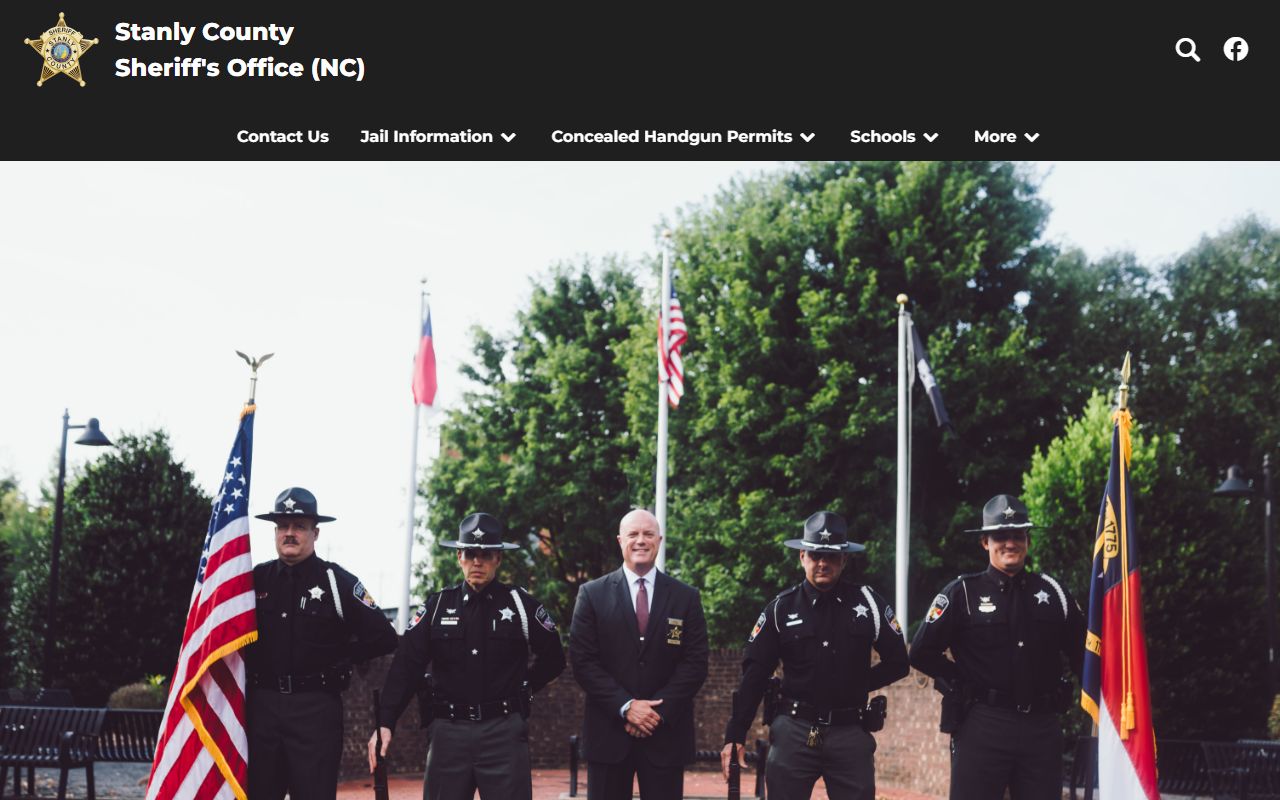
That sheriff source helps identify booking and public-safety channels before the user moves to court charge records or full criminal case records.
Search Stanly County Arrest Records
The first search path depends on the fact being checked. For custody or booking information, use the Stanly County inmate roster and the inmate records page. For charges filed in court, use the North Carolina eCourts Portal, which provides Smart Search, Search Hearings, payments, and judgment search for eCourts counties. Stanly County is an eCourts county, so public criminal case summaries can be searched online when the record is not restricted.
- Open the eCourts Portal and choose Smart Search for a charge or case lookup.
- Search by defendant name, case number, citation, attorney, or another identifier, then narrow the location to Stanly County when that filter is available.
- Open the case summary and review the charge list, offense date, statute, plea, bond, hearing, disposition, and financial entries that are public.
- Use the inmate roster only for custody and booking context. A roster profile is not a final court outcome.
- Ask the Stanly Clerk of Superior Court for certified copies or a certified single-county criminal search when an official record is needed.
The Stanly County inmate roster is the county source for current or recent jail custody records.
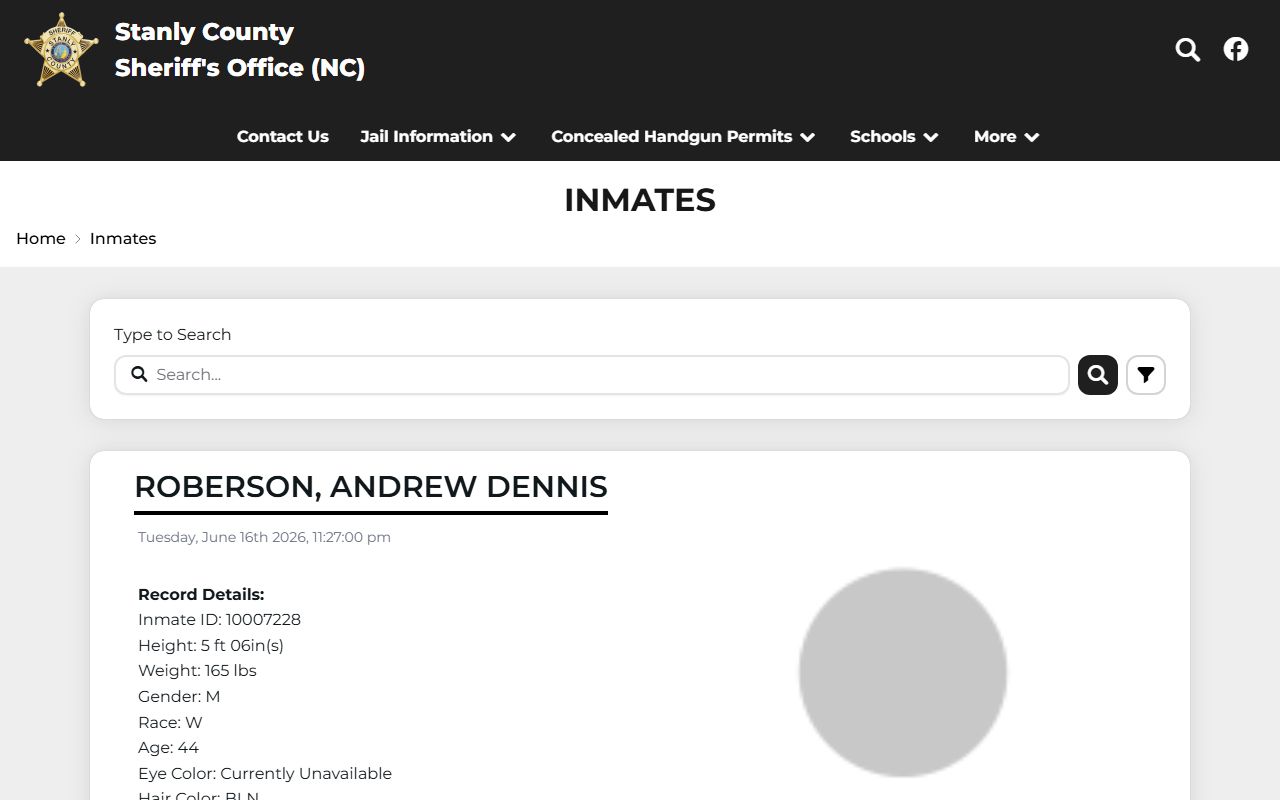
Roster data can point to a booking and charge button, while the court case record remains the better source for filed charge status and case outcome.
Charges After Arrest
After an arrest, the criminal accusation must be moved into a court process. In North Carolina, that process may involve law-enforcement citations, magistrate warrants, prosecutor decisions, or indictments. The District Attorney represents the State, decides how to proceed, and may dismiss, reduce, negotiate, or try charges. The public defender or appointed counsel represents a qualifying defendant, while the clerk can confirm case records and appointed-counsel status but cannot give legal advice.
| Document | Who Uses It | What It Starts |
|---|---|---|
| Criminal complaint or citation | Law enforcement or prosecutor | A misdemeanor, infraction, or initial criminal case path. |
| Warrant or magistrate process | Magistrate or court officer | An arrest, order for arrest, or case-linked court process. |
| Indictment | Grand jury | A formal felony charge in Superior Court. |
The sample inmate profile path from the sheriff roster shows how a booking profile can link toward charge detail.
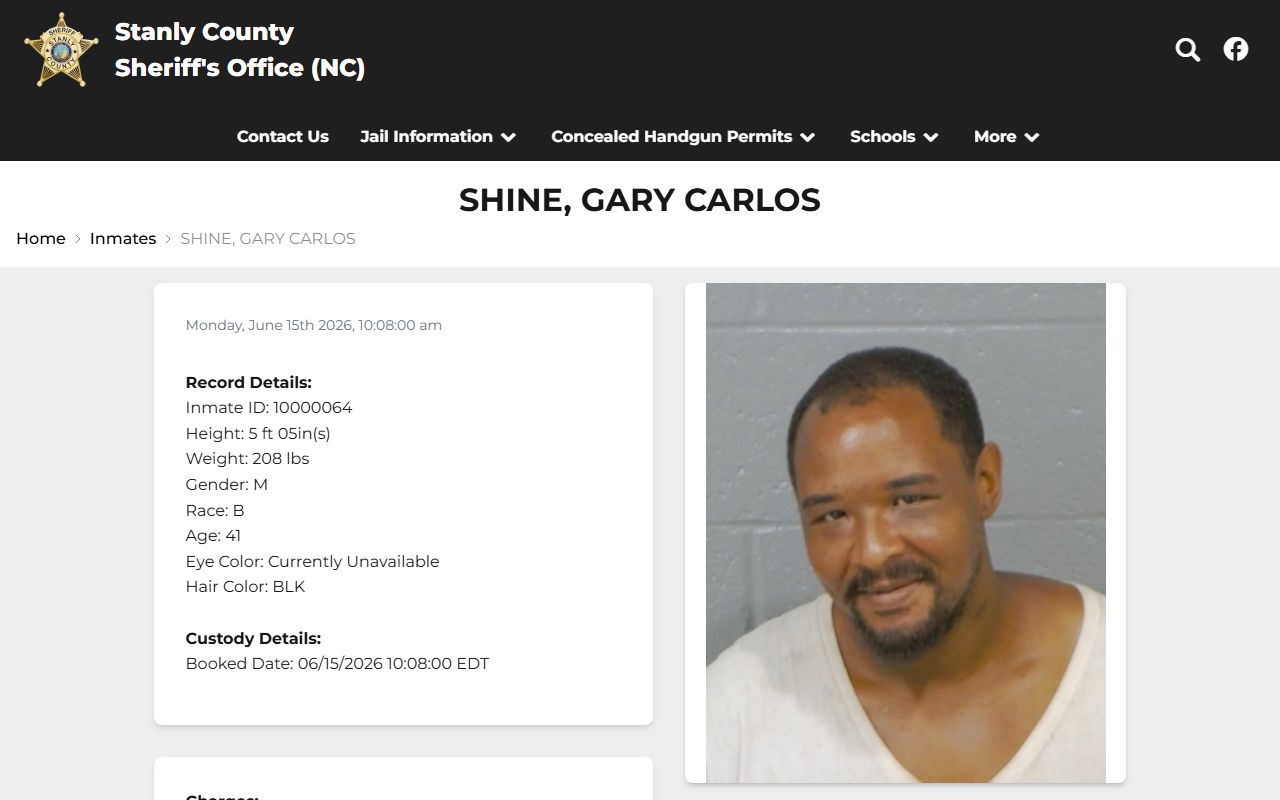
A booking profile can help locate the right person, but the court record must be checked for later amendments, dismissals, pleas, or convictions.
Stanly County Charge Status
Charge status can change many times after arrest. A charge may start as pending, move to a hearing, be amended to a different offense, be reduced as part of a plea, be dismissed, or end in a conviction. One arrest can also lead to several separate charges. The eCourts case summary may show case events, dispositions, hearings, financial information, and criminal details when the information is public and entered into the system.
| Status | What It Means |
|---|---|
| Pending | The charge has been filed and has not reached a final public disposition. |
| Amended or reduced | The filed accusation changed, often through prosecutor action, plea talks, or court order. |
| Dismissed | The charge was ended without a conviction, with the effect depending on the order and facts. |
| Disposition entered | The case or charge has an outcome, such as guilty, not guilty, responsible, not responsible, or dismissal. |
Note: A public search result should be checked against the clerk's official record before it is used for a legal filing.
Charges vs Convictions
A charge is an accusation. A conviction is a court outcome based on a guilty plea, guilty verdict, or finding of responsibility where that term applies. Stanly County arrest records may show an arrest and booking event even when the court charge later changes. A criminal court record can show charges that were dropped, dismissed, reduced, or resolved by plea. That is why court charges after arrest should not be read as proof of guilt.
| Point | Charge | Conviction |
|---|---|---|
| Record stage | Filed accusation after citation, warrant, arrest, or indictment. | Final guilt or responsibility outcome entered by the court. |
| What to verify | Current status, statute, court date, bond, and amendments. | Disposition, sentence, fines, costs, probation, and appeal entries. |
| Where to check | eCourts Portal, clerk record, and related sheriff booking source. | eCourts Portal and certified clerk records. |
Restricted Charge Records
North Carolina law gives the public broad access to court records, but that access has limits. G.S. 7A-109 requires clerks to keep court records, files, dockets, and indexes open for public inspection during regular office hours unless another law blocks access. Chapter 132 also supports inspection and copying of public records, but agencies do not have to create new records that do not exist.
Some charge records will not appear in a public arrest records search. Juvenile records are restricted under G.S. 7B-3000. Adoption records, involuntary hospitalization matters, sealed files, expunged records, protected addresses, Social Security numbers, financial account details, and sensitive victim information may also be hidden or redacted. Portal registration does not create a right to see restricted information.
| Record Type | Public Access Limit |
|---|---|
| Juvenile charge record | Generally withheld from public inspection unless law or court order allows access. |
| Expunged charge | Removed, sealed, or destroyed from official public access when statutory requirements are met. |
| Active investigation | Law-enforcement operational material may be withheld even when a court case exists. |
Expunctions After Dismissed Charges
Expunction is the North Carolina process for sealing or destroying qualifying criminal records. The state Judicial Branch explains that some expunction statutes apply to dismissed charges, some to not-guilty outcomes, and some to specific ages, offenses, or conviction types. For dismissed charges in Stanly County, the petition is filed in the county where the charge was brought, so the Stanly Clerk of Superior Court is the local filing point.
The North Carolina VINE portal is not an expunction system, but it is part of the custody and notification landscape connected to arrests and charge records.
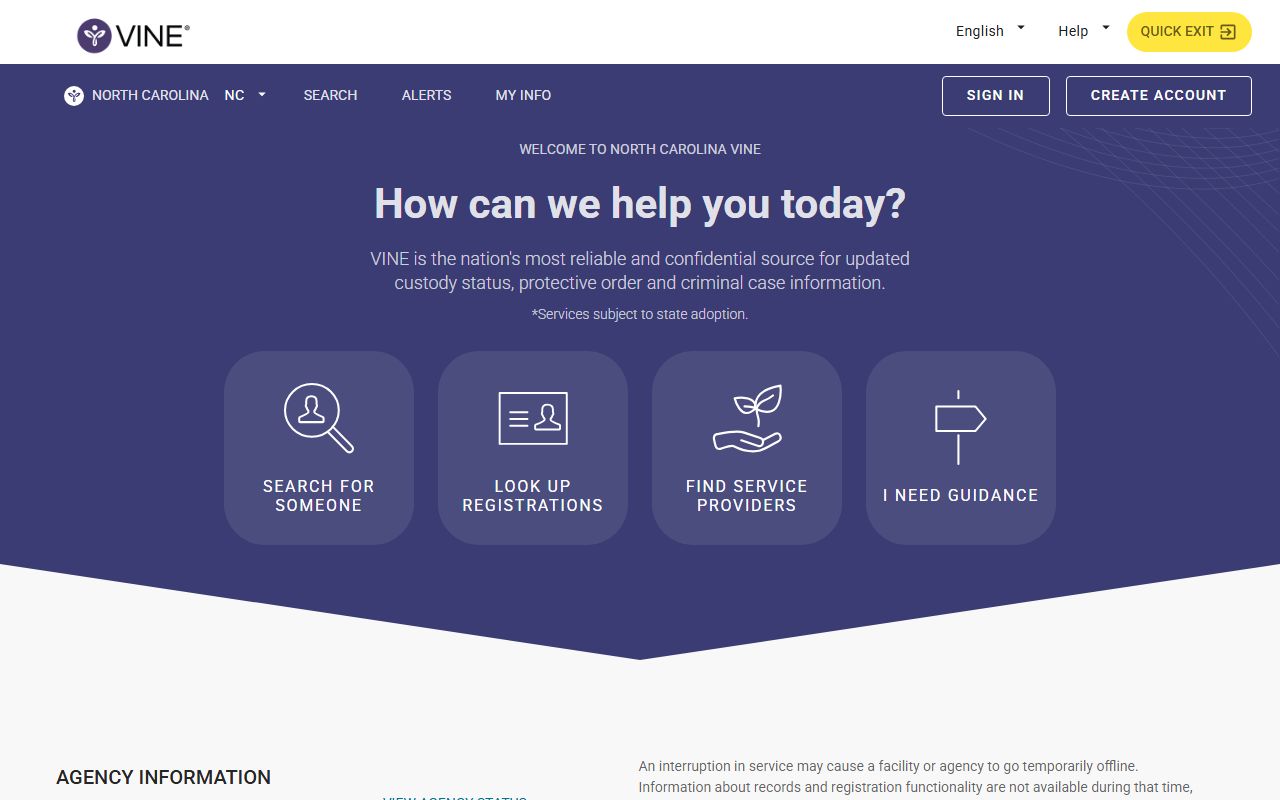
VINE can help with custody notice, while expunction questions belong with the court record, the clerk, and legal counsel.
Important: Expunction does not guarantee that every federal, immigration, private, or archived reference disappears from all systems.
State and Federal Records
A Stanly County charge record is local to the state court case, but related records can sit elsewhere. State prison, probation, and parole records are searched through the North Carolina Department of Adult Correction, not the county jail roster. Federal criminal cases for Stanly County route through the Middle District of North Carolina and PACER, not eCourts. Federal inmate custody is searched through the Bureau of Prisons inmate locator.
The U.S. Attorney's Office for the Middle District of North Carolina provides federal district information separate from Stanly County criminal prosecutions.
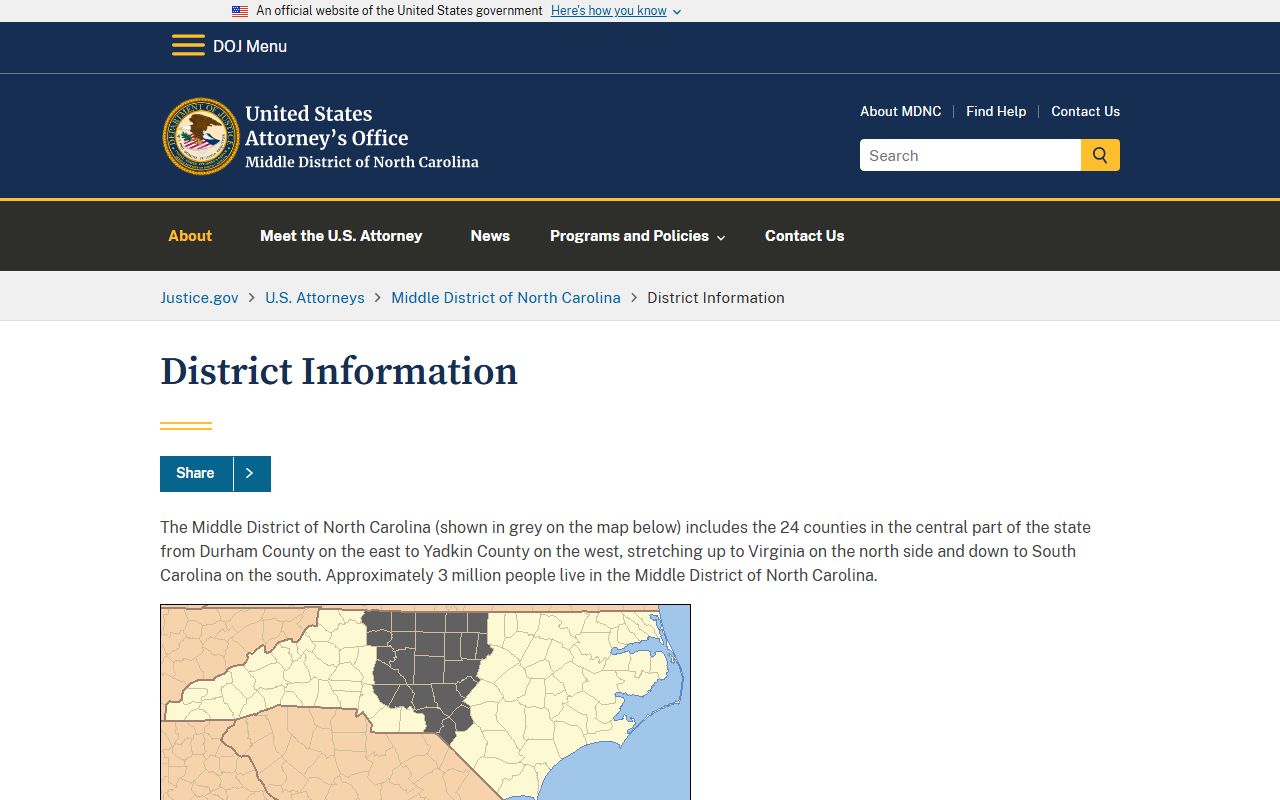
That federal source matters only when the charge is federal; ordinary Stanly County arrest and court charges stay in the state court and sheriff channels.
The Federal Bureau of Prisons inmate locator is the federal custody lookup source.
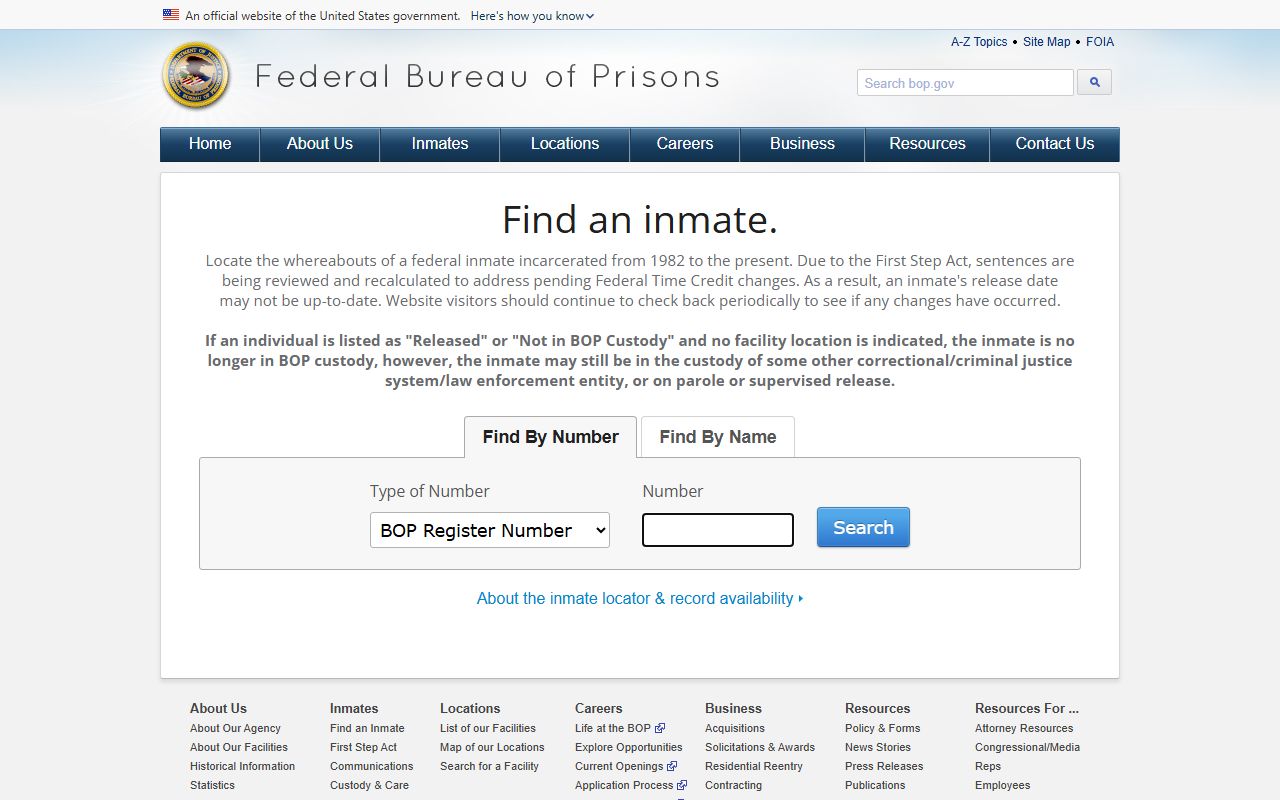
Use the federal locator only after confirming that the person is in federal custody rather than the Stanly County jail or North Carolina state system.
Stanly County Charge Contacts
For filed charges and certified court records, contact the Clerk of Superior Court through the Stanly County Courthouse. For prosecution decisions, the District Attorney is the state prosecutor. For booking, custody, and sheriff records, contact the Sheriff's Office or detention desk. Each office answers a different part of the arrest-to-charge path.
District Attorney, Prosecutorial District 28
Stanly County Courthouse
201 S Second St
Albemarle, NC 28002
(704) 986-7010
Stanly County Sheriff's Office
223 S 2nd St
Albemarle, NC 28001
(704) 986-3714