
Search Stanly County Court Records Online
Stanly County is an eCourts county, so the main online doorway for public court records is the North Carolina eCourts Portal. Smart Search is used for case information and court records. Search Hearings is used for court dates. NC Judgment Search is used for judgment-index information, while Make Payments handles eligible criminal, infraction, probation, and parole payments. The Portal is not the only access point, but it is the first public online stop for many Stanly County court records.
The best search starts with a case number, party name, citation number, attorney name, or other direct identifier. Portal training from the Judicial Branch says Smart Search can show a near-real-time case summary or Register of Actions, which may include case information, assignment information, party information, causes of action, events, dispositions, hearings, and financial information. For case-specific questions, the Portal directs users to the clerk in the county where the case is assigned.
- Open the eCourts Portal and choose Smart Search for a court records lookup.
- Enter a name, case number, attorney, citation, or other known identifier.
- Use advanced filters for Stanly County, party name, date of birth, case type, case status, and filing date range.
- Open the result and review the case summary, register of actions, hearings, dispositions, and financial information when shown.
- Contact the Stanly Clerk of Superior Court when a certified copy, paper file, older record, or sealed-record question cannot be handled online.
The Remote Public Access Program is also part of North Carolina's record-access system.
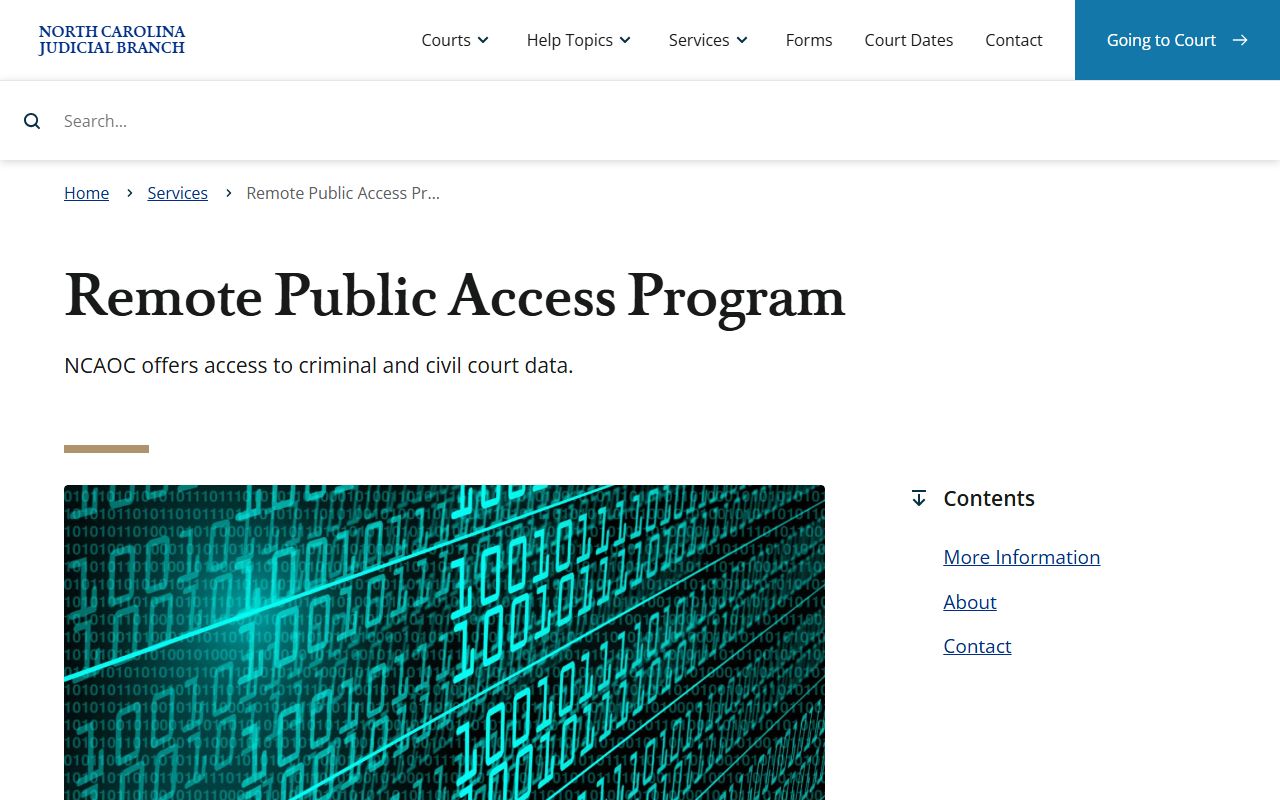
That program is aimed at licensed statewide data access and extracts, so ordinary Stanly County case searches still begin with Portal or the clerk.
Stanly County Court Records Search Fields
Portal fields matter because Stanly County court records can appear under different divisions and case types. A broad name search may return cases from several counties or unrelated people. A location filter, filing date range, date of birth, or case type narrows the result set. Judicial Branch training also describes wildcard searching: at least four case-number characters plus an asterisk, at least four business or nickname characters plus an asterisk, and at least three last-name characters plus one first-name character when using name wildcards.
| Field Label | Type | Required | Notes / Format |
|---|---|---|---|
| Search terms / Smart Search | Text | Needed to run search | Search by name, case number, attorney, citation, and more. |
| Location / County | Dropdown or filter | Optional | Use Stanly County to narrow local cases. |
| Party Name | Text or filter | Optional | Useful when the first search returns too many people or business names. |
| DOB | Date filter | Optional | Helps separate people with similar names. |
| Case Type | Dropdown or filter | Optional | Can narrow criminal, civil, family, estates, special proceeding, and other case groups. |
| Case Status | Dropdown or filter | Optional | Limits open, closed, disposed, or other available Portal status values. |
| Case Filing Date Range | Date range | Optional | Reduces older or unrelated results. |
The G.S. 7A-109 court record statute is one reason clerk-maintained dockets and indexes are central to access.
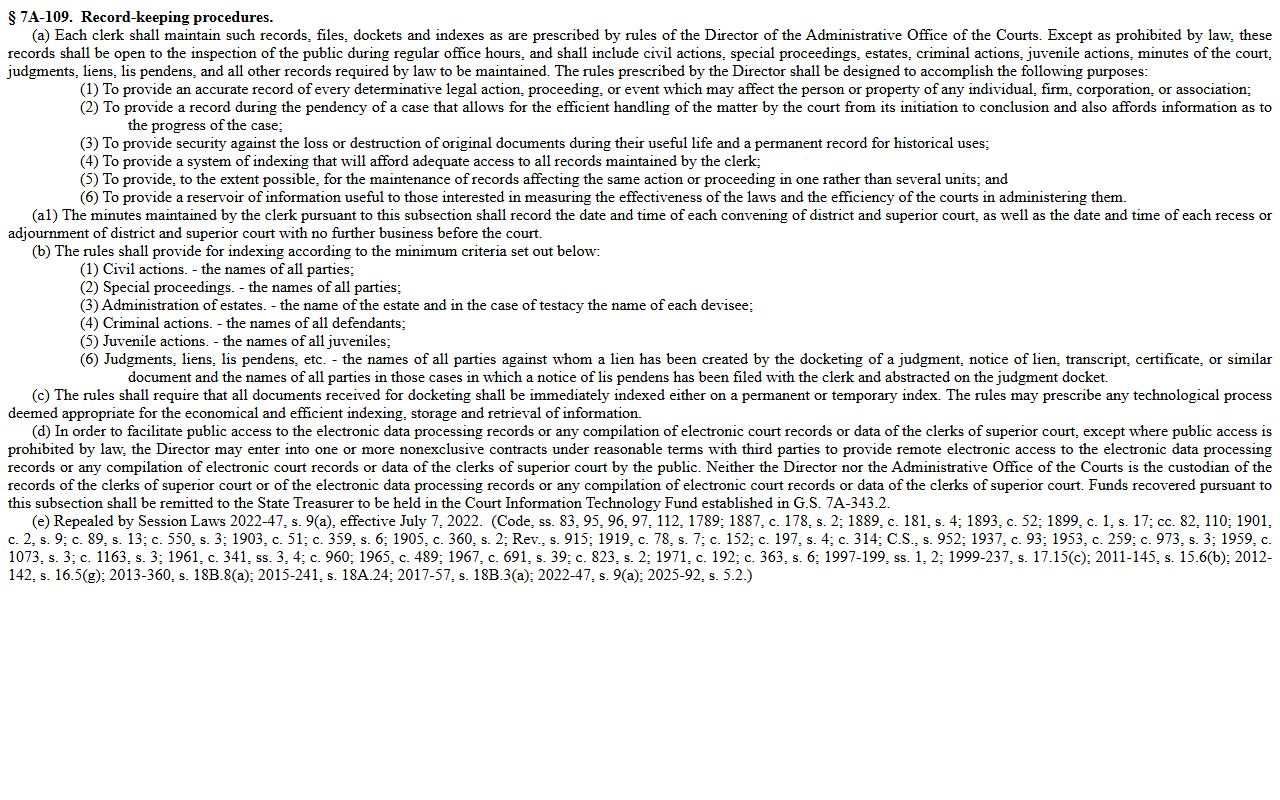
The statute supports public inspection during regular office hours unless another law restricts the Stanly County court record.
Types of Stanly County Court Records
Stanly County court records come from the North Carolina General Court of Justice. Superior Court handles felonies, civil cases over the District Court threshold, and appeals from District Court misdemeanors and infractions. District Court handles misdemeanors, infractions, traffic matters, domestic cases, juvenile matters, small civil cases, and magistrate small claims. The Clerk of Superior Court keeps records for both divisions, so the office is the local file custodian for a wide range of case types.
Some records that look court-related are not clerk case files. Police incident reports are law-enforcement records. Birth, death, and marriage certificates route to the Register of Deeds or NC Vital Records. State prison, probation, and parole records are held by the Department of Adult Correction. Federal civil, criminal, and bankruptcy records use federal courts and PACER, not the state eCourts Portal.
- Civil records can include complaints, summonses, motions, orders, judgments, liens, lis pendens, and financial entries.
- Criminal records can include charges, warrants or citations, pleas, motions, dispositions, judgments, sentences, probation terms, fines, costs, and restitution.
- Family records can include divorce, custody, support, equitable distribution, and domestic violence protective order matters, with some restricted data.
- Estate and special proceeding records can include wills after death, fiduciary appointments, inventories, creditor notices, guardianship, and related orders.
- Traffic and infraction records can include citation number, defendant, charge, court date, plea or waiver, disposition, fine, costs, and failure-to-appear entries.
The North Carolina Public Records Act supplies the broader public-record backdrop for existing government records.
Court records still have their own clerk rules and confidentiality limits, so public-record access does not make every filed item public.
What Stanly County Court Records Show
A Stanly County case summary is not just a name search result. It can identify the court location, division, case type, status, parties, attorneys, hearing events, case events, dispositions, and financial information when those details are public. The official training materials describe the Register of Actions as a case timeline. That timeline is often the best way to see whether a hearing was continued, an order was entered, a judgment was indexed, or a criminal charge reached disposition.
| Field | What It Shows |
|---|---|
| Case Number | The eCourts/Odyssey format, such as year, case type letters, sequence number, and county identifier. |
| Court / Location | Whether the case is tied to Stanly County District Court, Superior Court, estates, family, or another case category. |
| Parties | Names such as defendant, plaintiff, petitioner, respondent, decedent, fiduciary, or judgment debtor and creditor when public. |
| Assignment | Judicial officer, courtroom, hearing date and time, and event type when available. |
| Docket / Events | Filings, hearings, orders, continuances, judgments, payment events, warrants, and failure-to-appear events when case-linked. |
| Disposition | The case or charge outcome, such as dismissed, guilty, not guilty, judgment entered, closed, or other Portal values. |
| Financial Information | Court costs, fines, restitution, fees, attorney-fee repayment, probation or parole fees, and judgment balances when applicable. |
The PACER lookup for the Middle District of North Carolina is separate from Stanly County's state Portal.
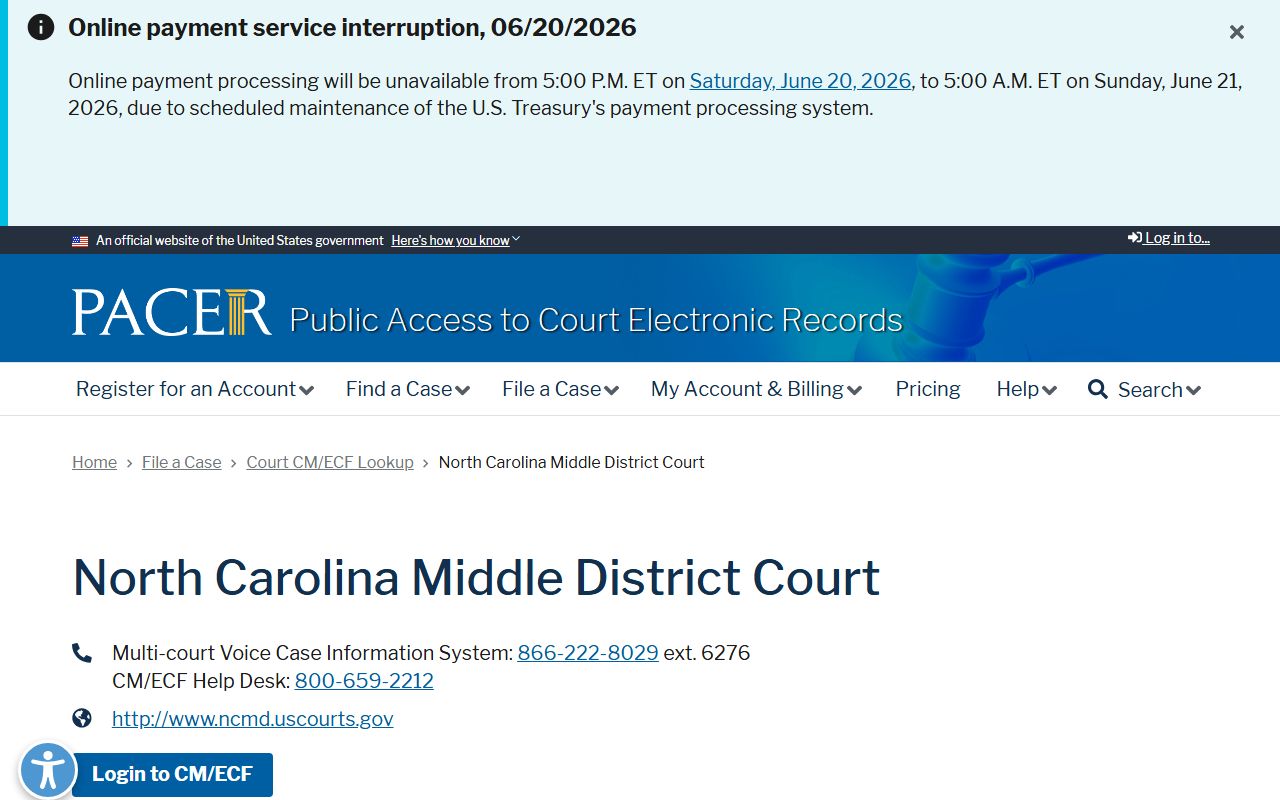
Use PACER only for federal district cases; local Stanly County Superior and District Court records stay with eCourts and the clerk.
Public Access Framework for Stanly County Court Records
Public access to Stanly County court records rests on more than one rule. G.S. 7A-109 says clerks keep records, files, dockets, and indexes and that those records are open for public inspection during regular office hours unless the law says otherwise. Chapter 132 also requires access to existing public records subject to limits and copy-fee rules. These laws support access, but they do not require the clerk to create a new report or release confidential material.
For ordinary Stanly County court records, use the Portal, public courthouse terminals, paper files at the clerk's office, or copy requests. For certified single-county criminal record searches, the official criminal background-check process uses form AOC-CR-314 through the clerk and a $25 fee. For existing Judicial Branch records outside the normal case-file path, the Judicial Branch public-record request process is the fallback.
Note: Public inspection rights do not override sealed files, juvenile confidentiality, expunction orders, or protected personal identifiers.
Restricted Stanly County Court Records
Some Stanly County court records are not open to anonymous public viewing. Juvenile delinquency, undisciplined, abuse, neglect, and dependency matters are restricted under G.S. 7B-3000. Adoption files, involuntary hospitalization and similar mental-health proceedings, sealed cases, expunged cases, protected addresses, minor information, Social Security numbers, and financial account identifiers may be withheld or redacted. Portal registration also does not create automatic access to restricted records.
Expunction is a separate process for qualifying criminal records. The Judicial Branch expunction materials explain that different statutes apply based on whether a case ended in dismissal, not guilty, age-limited relief, or another listed outcome. For dismissed charges, G.S. 15A-146 is one important statute. A Stanly County expunction petition is filed in the county where the charge was brought, so the Stanly Clerk of Superior Court is the local filing point for Stanly charges.
The PACER lookup for the Middle District bankruptcy court handles federal bankruptcy dockets and documents.
Bankruptcy records are not Stanly County clerk files, even when a debtor or property is located in the county.
Clerk Requests for Stanly County Court Records
The Stanly Clerk of Superior Court is the local record office for Superior Court and District Court files. Visit the clerk for public terminals, paper files, certified copies, certified single-county criminal searches, older or non-digitized records, and case-specific questions that the Portal does not answer. Bring the case number if known. If not, bring full names, approximate dates, case type, citation number, or other facts that can help staff locate the record.
Stanly County Clerk of Superior Court
Stanly County Courthouse
201 S Second St
Albemarle, NC 28002
(704) 986-7000
Monday-Friday, 8:30 AM-5:00 PM
For broad legal research outside a local case file, CourtListener can help locate opinions and some docket materials.
CourtListener is not the official custodian for Stanly County court records, so certified case copies still come from the clerk or the court that holds the file.