
Stanly County Criminal Court Records
A Stanly County criminal court record is the case-level file kept by the Clerk of Superior Court after a criminal matter reaches court. It can include the charging document, case number, defendant, court division, appearances, bond conditions, pleas, motions, hearing events, dispositions, judgments, sentencing, probation terms, fines, costs, restitution, and appeal entries. The court record is broader than a charge listing and narrower than a full law-enforcement investigative file.
Criminal court records in Stanly County are split by the North Carolina trial structure. District Court handles misdemeanors, infractions, traffic offenses, and many first appearances without a jury. Superior Court handles felonies and District Court appeals, with many appealed criminal District Court cases receiving a new trial in Superior Court. The Stanly County arrest records and court charges page is the better fit for arrest-to-charge detail, while criminal court records focus on the court file and outcome.
How to Search Stanly County Criminal Court Records
Use the North Carolina eCourts Portal for public online criminal case information in Stanly County. Smart Search can be searched by name, case number, attorney, citation, and other identifiers. Advanced filters can narrow by location, party, date of birth, case type, case status, and filing date range. Portal training says case summaries may include the Register of Actions, party information, case events, dispositions, hearings, and financial information.
- Open the eCourts Portal and choose Smart Search for criminal case records.
- Search by defendant name, case number, citation number, attorney, or another known identifier.
- Use location and case-type filters to narrow results to Stanly County criminal or infraction matters.
- Open the case and read the docket events, hearings, disposition, judgment, sentence, and financial entries when public.
- Request certified copies or a certified single-county criminal record search through the Stanly Clerk of Superior Court when needed.
Certified criminal background checks use a different path. The Judicial Branch criminal background-check help topic says a certified single-county search is submitted to the clerk on form AOC-CR-314 with a $25 fee. Public courthouse terminals can also be used for noncertified searches. The Portal is helpful for case information, but it is not the recommended certified background-check method.
Stanly County Criminal Record Stages
A criminal court record changes as the case moves. The first public case entries may involve a citation, warrant, arrest, indictment, initial appearance, bond, or first court date. Later entries may show continuances, motions, plea negotiations, trial settings, verdicts, dismissals, judgments, sentencing, probation, restitution, or appeal notices. The District Attorney represents the State, and defense counsel or appointed counsel represents the defendant when counsel is retained or assigned.
Case flow: Charges Filed › Arraignment › Pretrial / Motions › Plea or Trial › Disposition › Sentencing
| Stage | What Happens |
|---|---|
| Charges Filed | A citation, warrant, criminal process, information, or indictment starts the court case record. |
| Arraignment / First Appearance | The defendant appears, release terms may be addressed, and future dates are set. |
| Pretrial / Motions | The docket may show continuances, discovery issues, bond changes, suppression motions, or other requests. |
| Plea or Trial | The record may show a plea, bench trial, jury trial, dismissal, or verdict depending on court and charge level. |
| Disposition / Sentencing | The case or charge outcome is entered with sentence, costs, fines, restitution, probation, or other terms when applicable. |
The North Carolina expunction help topic explains how some outcomes may later qualify for record relief.
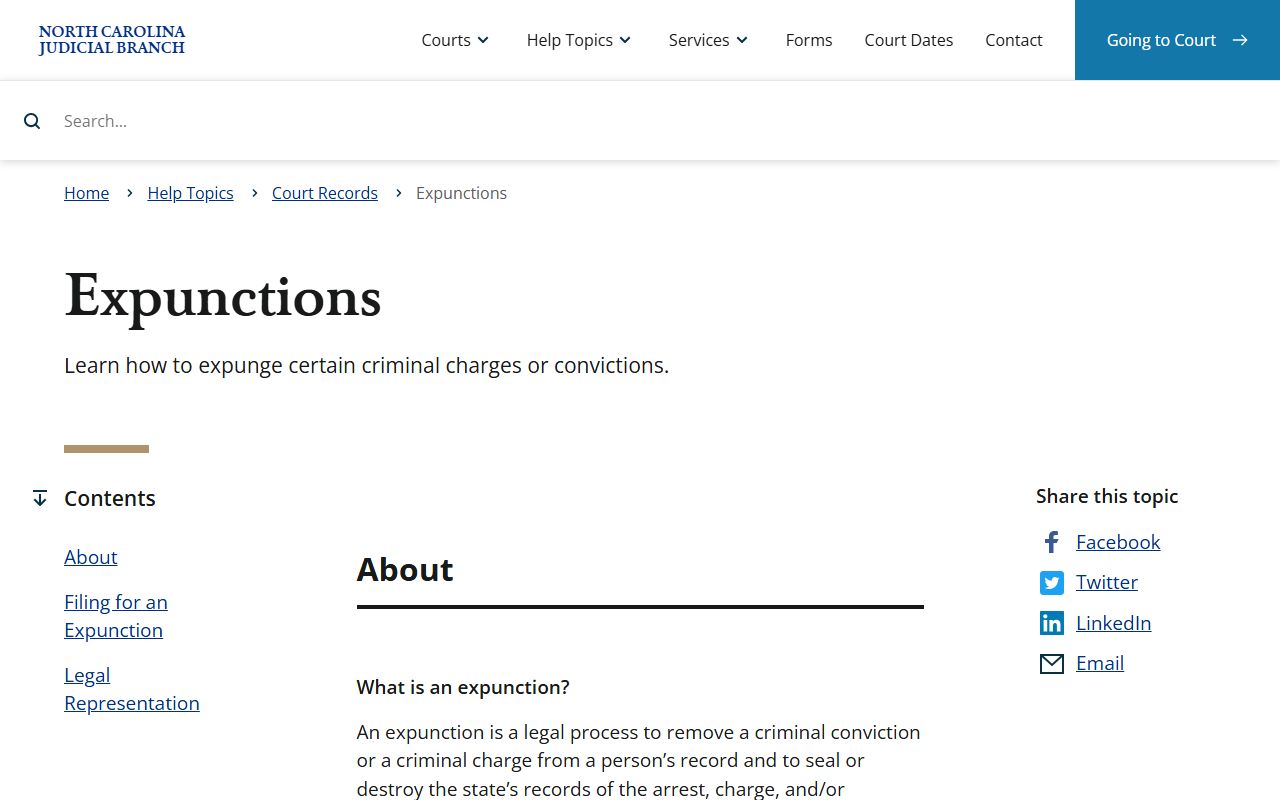
Expunction is not automatic from a docket entry alone; the court must apply the relevant statute and enter an order when relief is granted.
Stanly County Criminal Record Fields
The criminal case file should be read field by field. A charge line is not the whole case. The docket can show how the charge changed, whether it was dismissed, whether a plea was entered, whether a sentence was imposed, and whether costs or restitution remain. Some entries are brief, so a certified copy or clerk file review may be needed when a record will be used for court, licensing, immigration, housing, or employment decisions.
| Field | What It Shows |
|---|---|
| Case Number | The official eCourts identifier, including year, case type letters, sequence, and county identifier when shown. |
| Defendant | The person charged, plus party or attorney data that is public. |
| Charges | Charge description, statute, offense date, charge status, and related citation or warrant data when entered. |
| Hearings | Scheduled appearances, courtroom, judicial officer, event type, continuances, and hearing results. |
| Plea | The defendant's response to a charge, such as guilty, not guilty, responsible, or other allowed entries. |
| Disposition | The case or charge outcome, including dismissed, not guilty, guilty, responsible, or other final status. |
| Sentence | Punishment or conditions after conviction, including probation, custody, fines, fees, costs, or restitution. |
| Financial Information | Court costs, fines, restitution, attorney-fee repayment, probation or parole fees, and payment events when public. |
The official dismissed-charge expunction form page is tied to relief under G.S. 15A-146.
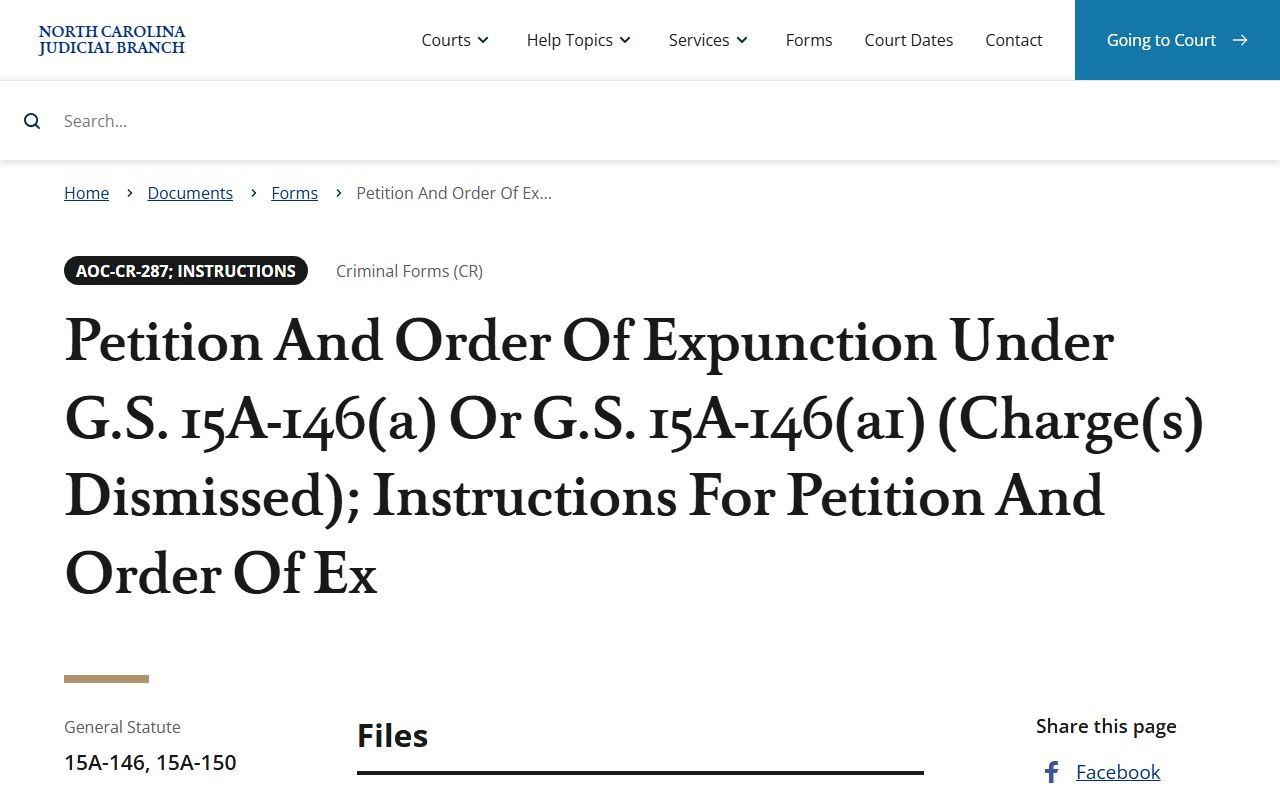
The form page matters when a Stanly County criminal court record ended in dismissal or a not-guilty result and statutory relief may apply.
Stanly County Criminal Charges vs Convictions
A charge is an accusation filed in court. A conviction is a finding or plea of guilt or responsibility. Stanly County criminal court records may show charges that were amended, reduced, dismissed, or tried. A dismissed charge can remain visible unless sealed or expunged. That distinction is why the disposition field is critical. Never treat the charge name alone as proof that a person was convicted.
| Charge | Conviction | |
|---|---|---|
| Stage | Accusation or filed offense. | Final finding, plea, or adjudicated outcome. |
| Record Clue | Charge description, statute, warrant, citation, or indictment. | Disposition, judgment, sentence, probation, fine, or restitution entry. |
| Public Meaning | Shows that the case was filed or alleged. | Shows that the case ended with guilt or responsibility on that charge. |
| Possible Later Change | May be amended, reduced, dropped, dismissed, or expunged if eligible. | May be appealed, modified, or expunged only if a statute allows relief. |
Stanly County Criminal Dispositions
Disposition is the outcome of a case or charge. In Stanly County criminal court records, a disposition may show guilty, not guilty, responsible, not responsible, dismissed, or another court-used result. A sentence is different from a disposition. The sentence shows what the court ordered after conviction, such as custody, probation, community conditions, fine, costs, restitution, or attorney-fee repayment. Financial information may also show payment events or balances.
District Court criminal proceedings are not always recorded in the same way as Superior Court matters, and some District Court appeals move to Superior Court for a new trial. When an outcome is unclear, compare the docket event, judgment entry, and sentence field. For certified proof, use the clerk's office rather than a screenshot or third-party result.
Stanly County Sealed Criminal Records
Restricted criminal records are a major access limit. Juvenile records are withheld from public inspection under G.S. 7B-3000 except by court order or statutory authorization. Expunction can seal or destroy qualifying records of an arrest, charge, or conviction. Public searchers should not expect expunged cases to appear in ordinary Portal results. Sealed records may still exist but be hidden from public view.
| Sealed | Expunged | |
|---|---|---|
| Public Visibility | Hidden from public access unless an order or statute allows viewing. | Removed from ordinary public record results after a valid court order. |
| Common Trigger | Confidential case type, protective order, juvenile matter, or court order. | Statutory petition, such as dismissed-charge relief when requirements are met. |
| Where Filed | Usually controlled by the court that holds the case. | Filed in the county where the charge was brought. |
| Practical Limit | May still be available to authorized users. | May not erase every federal, immigration, or non-court consequence. |
The text of G.S. 15A-146 is one official source for dismissed-charge expunction eligibility.
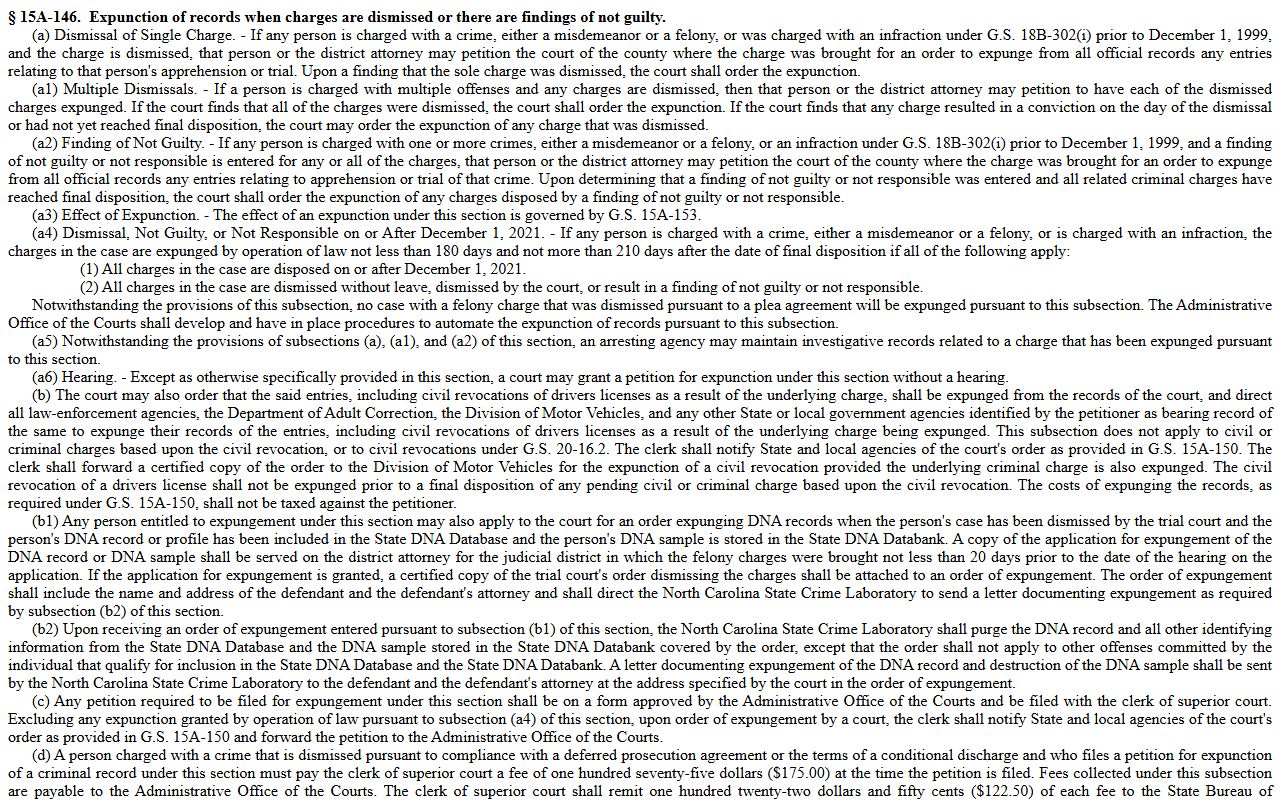
The statute should be matched to the exact Stanly County criminal court record outcome before a petition is filed.
Stanly County Criminal Court Access
North Carolina public access rules make many Stanly County criminal court records open, but not all. G.S. 7A-109 requires clerks to keep records, files, dockets, and indexes and opens them for public inspection during regular office hours unless a law restricts access. Chapter 132 supports access to existing public records and copy requests subject to statutory limits. Those rules do not override juvenile confidentiality, expunction, sealed files, or protected personal data.
Key Statutes:
G.S. 7A-109 - clerks maintain court records and open them for inspection unless another law bars access.
G.S. 7B-3000 - juvenile court records are withheld from public inspection except by order or statute.
The juvenile records statute is especially important for Stanly County criminal court records involving minors or juvenile proceedings.
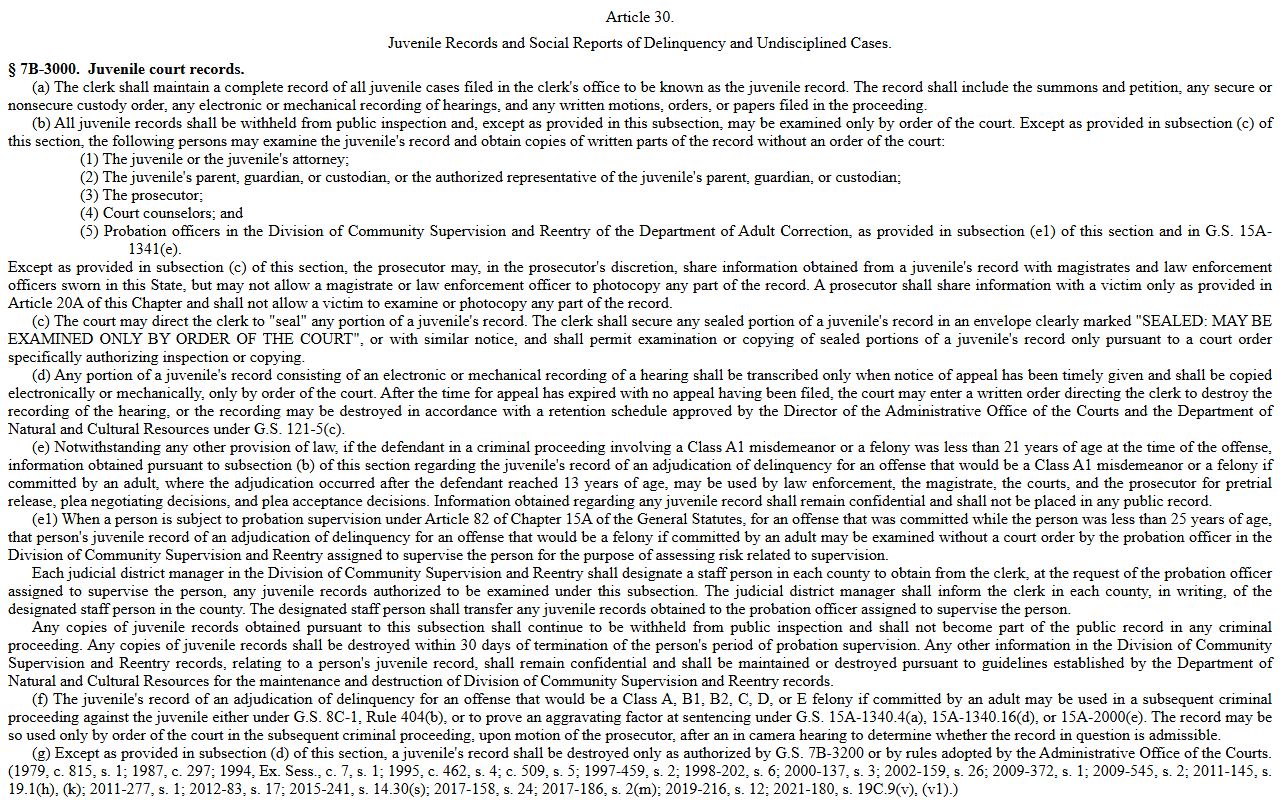
Adult criminal court records and juvenile court records follow different public-access rules, even when both involve alleged offenses.
Stanly County Certified Criminal Searches
For a certified single-county criminal search, use the Stanly Clerk of Superior Court and the official AOC-CR-314 process rather than a casual Portal lookup. The research identifies a $25 fee for that certified county search. Mail payments must be money order or certified check. In-person payments may include credit card, cash, money order, or certified check. Public terminal checks can be useful, but certification comes from the clerk.
Important: Do not use casual Portal results as a substitute for a certified criminal record search.
Restricted Criminal Court Records in Stanly County
Restricted Stanly County criminal court records can include juvenile cases, sealed matters, expunged charges, protected victim information, confidential addresses, Social Security numbers, financial account identifiers, and records limited by a court order. Active investigations and full police reports are not the same as the criminal court file and may be withheld by law-enforcement agencies. Portal registration does not grant elevated access by itself; elevated access is limited to users with verified statutory authority and business need.
Stanly County's District Attorney is in Prosecutorial District 28. The District Attorney represents the State in criminal cases, while public defenders, contract attorneys, or appointed private counsel represent qualifying indigent defendants. North Carolina Indigent Defense Services lists Stanly County with Defender District 20A and directs people to contact the clerk to learn whether a lawyer has been assigned. The Stanly County IDS page gives that public-defense context.
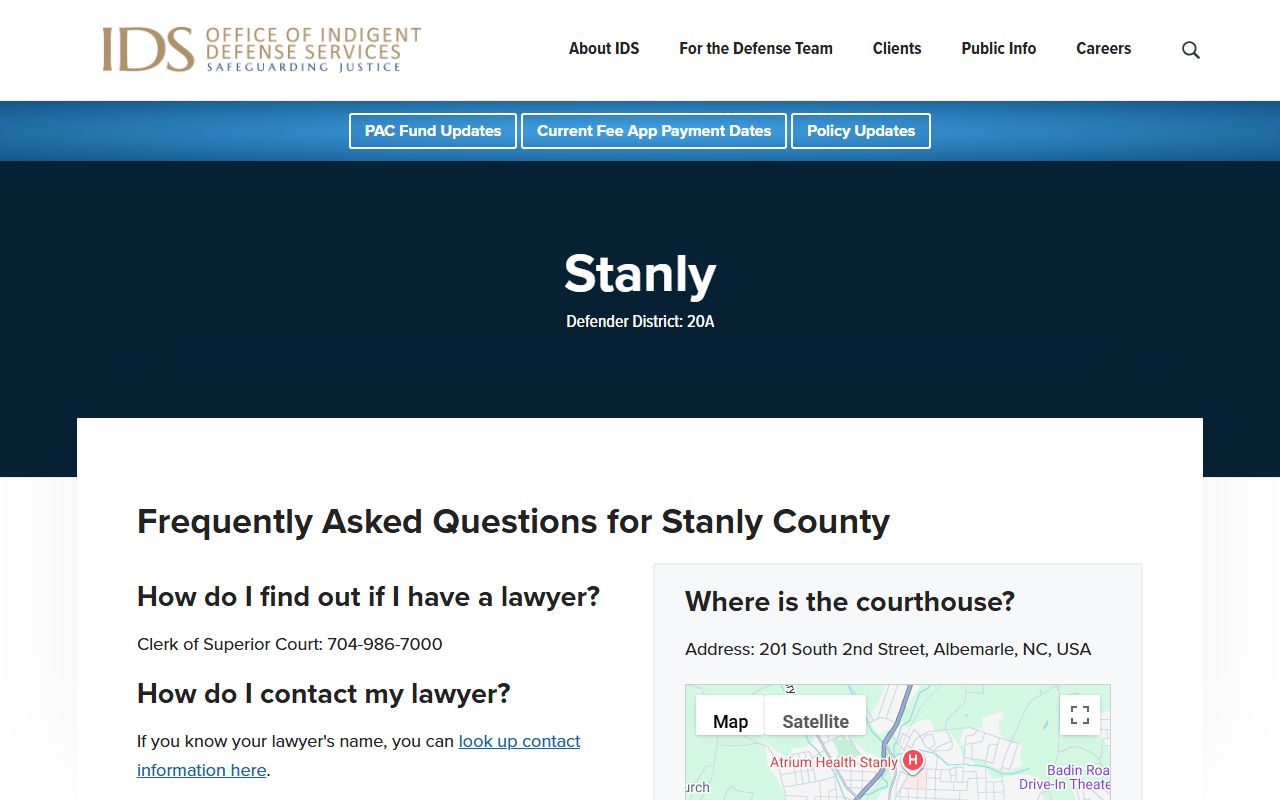
Defense-counsel information helps explain parties and appearances in a criminal court record, but it does not change the clerk's role as record custodian.
The District Attorney county lookup also identifies prosecutorial contact context for Stanly County criminal court records.
Prosecutor contact information can clarify which office handles the State's side of a case, while copies and docket access still route through eCourts or the clerk.