
Stanly County Superior Courts Overview
North Carolina uses a unified state court system called the General Court of Justice. Stanly County is listed by the North Carolina Judicial Branch in Prosecutorial District 28, Superior Court District 28, and District Court District 28. The local court office is not a county-run court in the Texas or Florida sense. Court operations are part of the state Judicial Branch, and the county-level elected Clerk of Superior Court keeps records for both Superior Court and District Court matters.
Superior Court handles felonies, civil cases over $25,000, and appeals from District Court misdemeanors and infractions. District Court handles misdemeanors, infractions, juvenile matters, domestic cases, civil cases under $25,000, small claims through magistrates, and most traffic matters. The Stanly County Courthouse is the practical local access point for both divisions, the clerk, magistrates, District Attorney, Family Court, Guardian ad Litem, court-ordered arbitration, and public terminals.
The North Carolina Superior Court overview describes the division's felony, civil, and appellate role.
That statewide structure controls how Stanly County Superior Court records are created and how appeals from District Court reach Superior Court.
List of Stanly County Superior Courts
Stanly County does not have a list of separately numbered Superior Courts in the research file. Instead, it has one county courthouse within Superior Court District 28. The required court list is therefore a functional list of the local state court access points, not a set of numbered county courts. Use the courthouse and the correct division phone when checking calendars, records, or case assignment.
| Court # | Type | Address | Phone |
|---|---|---|---|
| District 28 | Superior Court, felony and civil over $25,000 | 201 S Second St, Albemarle, NC 28002 | Superior Court Judges: (704) 986-7016 |
| District 28 | District Court, misdemeanors, traffic, domestic, juvenile, civil under $25,000 | 201 S Second St, Albemarle, NC 28002 | District Court Judges and Family Court: (704) 986-7012 |
| District 28 | Magistrates, small claims and initial criminal process | 201 S Second St, Albemarle, NC 28002 | (704) 986-7019 |
| District 28 | Clerk of Superior Court, records and probate | 201 S Second St, Albemarle, NC 28002 | (704) 986-7000 |
| Prosecutorial District 28 | District Attorney, state criminal prosecutions | 201 S Second St, Albemarle, NC 28002 | (704) 986-7010 |
The North Carolina District Court overview explains the lower trial division that works beside Stanly County Superior Court.
Many local searches require knowing whether the case is a Superior Court felony or higher-value civil matter, or a District Court misdemeanor, traffic, family, juvenile, small-claims, or lower civil matter.
Superior Court vs District Court
North Carolina does not use county courts or justice of the peace courts for Stanly County court-record purposes. The lower-court map identifies District Court, magistrates, and municipal ordinance or citation matters handled through the state District Court framework. This comparison uses the real Stanly County structure so a reader does not search for a county court that does not exist.
| Superior Court | District Court | Magistrates | |
|---|---|---|---|
| Civil limit | Civil cases over $25,000 | Civil cases under $25,000 | Small claims up to $10,000 |
| Criminal jurisdiction | Felonies and appeals from District Court misdemeanors or infractions | Misdemeanors, infractions, traffic, and first-level criminal matters | Warrants, initial appearances, and other first-step criminal process |
| Family and juvenile matters | Not the main division for ordinary family or juvenile cases | Divorce, custody, support, domestic, and juvenile matters | No full family docket; limited small-claims and initial process roles |
| Records custodian | Clerk of Superior Court | Clerk of Superior Court | Clerk of Superior Court for filed records |
How a Case Moves Through the Stanly County System
A Stanly County criminal case may begin with a citation, warrant, arrest, magistrate process, or indictment. Misdemeanors and infractions usually begin in District Court. Felonies proceed to Superior Court after the charging and indictment stages. The District Attorney in Prosecutorial District 28 prosecutes state criminal cases, and the clerk maintains the public court record as filings and events occur.
Criminal flow: Citation or arrest › Magistrate or first appearance › District Court setting › Indictment for felony matters › Superior Court arraignment › Pretrial motions › Plea or trial › Judgment and sentence › Appeal.
Civil flow: Complaint or petition filed › Service › Answer or response › Motions › Discovery or mediation › Trial or hearing › Judgment or order › Appeal when allowed.
The North Carolina court system overview describes the unified General Court of Justice.
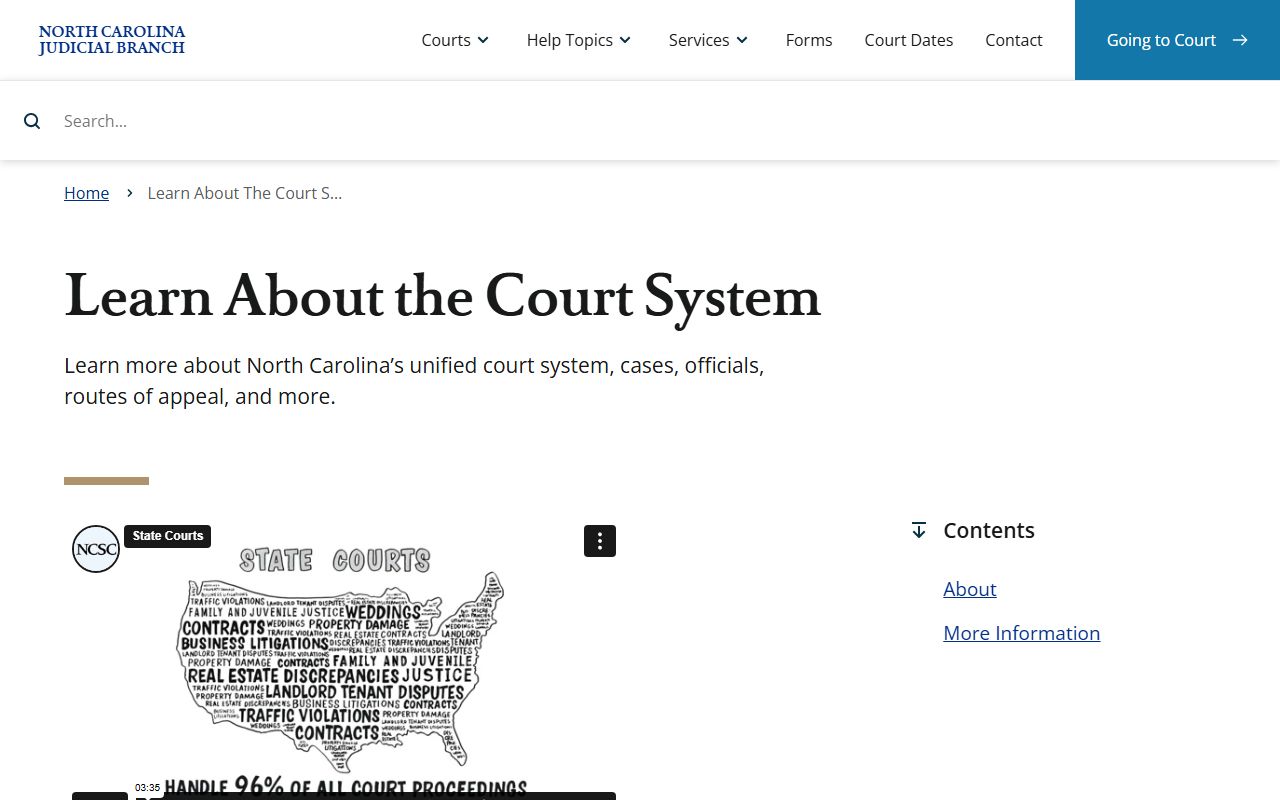
The unified structure is why Stanly County Superior Court, District Court, magistrates, and the clerk share the same state Judicial Branch framework.
Civil, Family, and Criminal Divisions
Superior Court is the main trial division for felonies and civil cases over $25,000. Felony records can include indictments, arraignments, motions, pleas, trial events, dispositions, judgments, sentences, probation terms, fines, costs, restitution, bond entries, and appeal entries. Civil Superior Court records may include complaints, summonses, answers, motions, orders, judgments, liens, lis pendens, and financial entries.
Family, juvenile, traffic, misdemeanors, infractions, and lower civil cases generally route through District Court. Family matters may include divorce, custody, child support, equitable distribution, domestic violence, and local case-management forms. Juvenile records are restricted under state law. Traffic citations are court records when filed in District Court, while crash reports remain law-enforcement records and driver-license records remain DMV records.
Note: Use Stanly County court records for a broader case-search route across both trial divisions.
Stanly County Judicial District
Stanly County is assigned to Superior Court District 28, District Court District 28, and Prosecutorial District 28. The contact directory lists Superior Court Judges at (704) 986-7016, District Court Judges and Family Court at (704) 986-7012, District Attorney at (704) 986-7010, Magistrates at (704) 986-7019, Guardian ad Litem at (704) 698-3238, Court-Ordered Arbitration at (704) 986-7012, and Official Court Reporter at (704) 986-7094.
State appellate review goes to the North Carolina Court of Appeals and, in some matters, the Supreme Court of North Carolina. Federal cases are separate. Stanly County is in the U.S. District Court for the Middle District of North Carolina and the U.S. Bankruptcy Court for the Middle District of North Carolina, but those records are searched through federal CM/ECF and PACER systems rather than the county clerk.
The U.S. District Court for the Middle District of North Carolina is separate from Stanly County Superior Court.
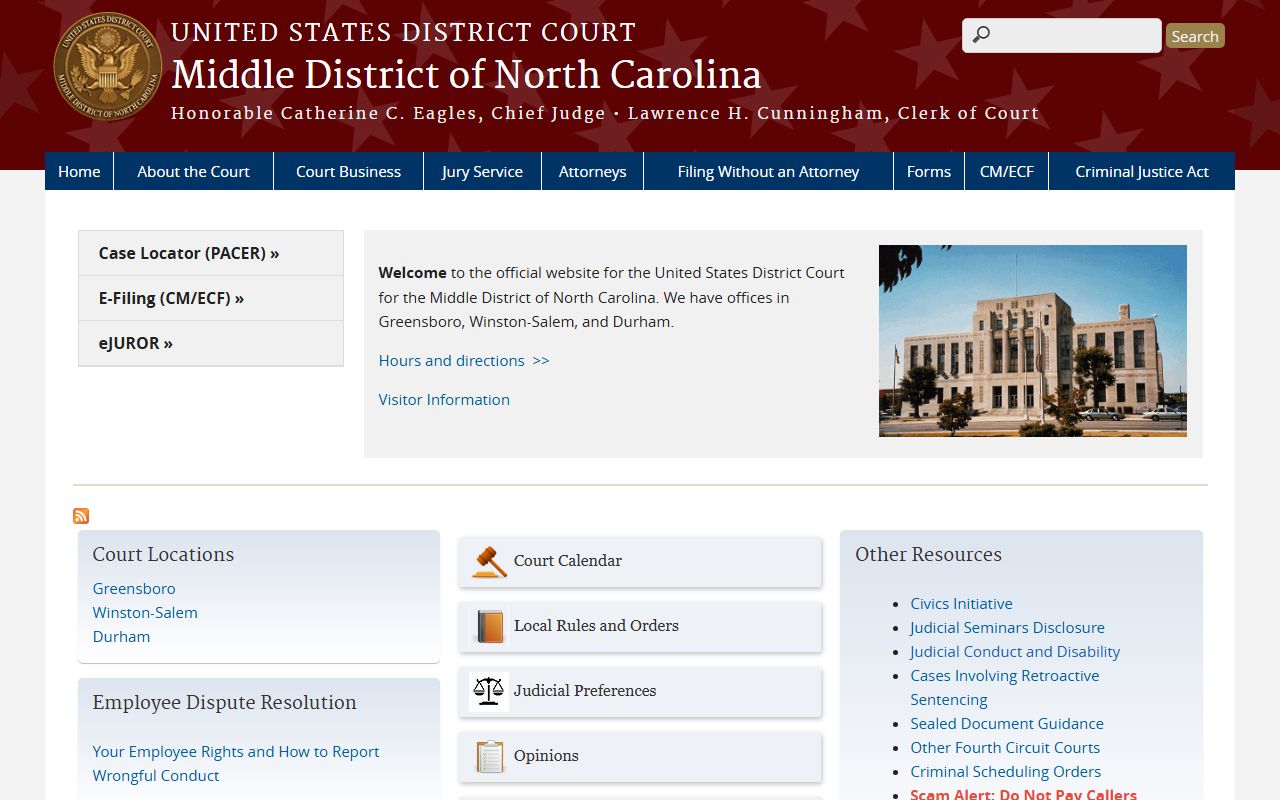
Use federal court systems for federal crimes, federal civil cases, and bankruptcy matters, even when a party lives in Stanly County.
Magistrate and Lower Courts
Magistrates operate inside the District Court structure. In Stanly County, magistrates handle small claims up to $10,000, landlord eviction, recovery of personal property, mechanics' liens, warrants, initial appearances, and other early criminal processes. They are not a separate justice of the peace court for record-search purposes. When a magistrate matter creates a filed court record, the Clerk of Superior Court is still the records office.
Municipal ordinance and citation matters are handled through the state District Court framework rather than separate local municipal courts for court-record purposes. If a record involves a traffic citation, infraction, misdemeanor, or small claim, search the eCourts Portal and contact the clerk or magistrate office based on the case stage. Appeals from many District Court criminal matters go to Superior Court for a new trial.
The Middle District federal court locations page helps separate federal courthouse locations from the Stanly County courthouse path.
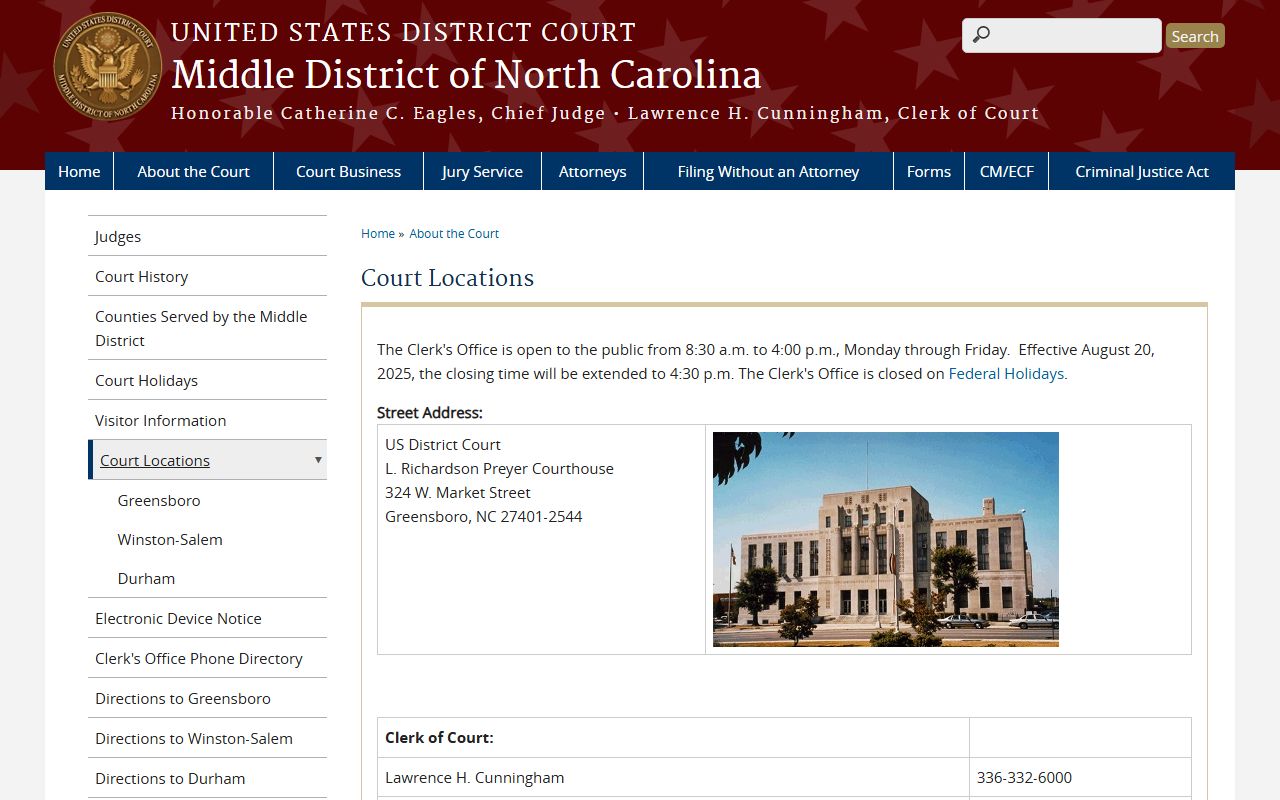
Federal location pages are useful only when the case is in federal court; Stanly County Superior Court and District Court records remain state court records.
The U.S. Bankruptcy Court for the Middle District of North Carolina maintains bankruptcy case access outside the Stanly County Superior Court file system.
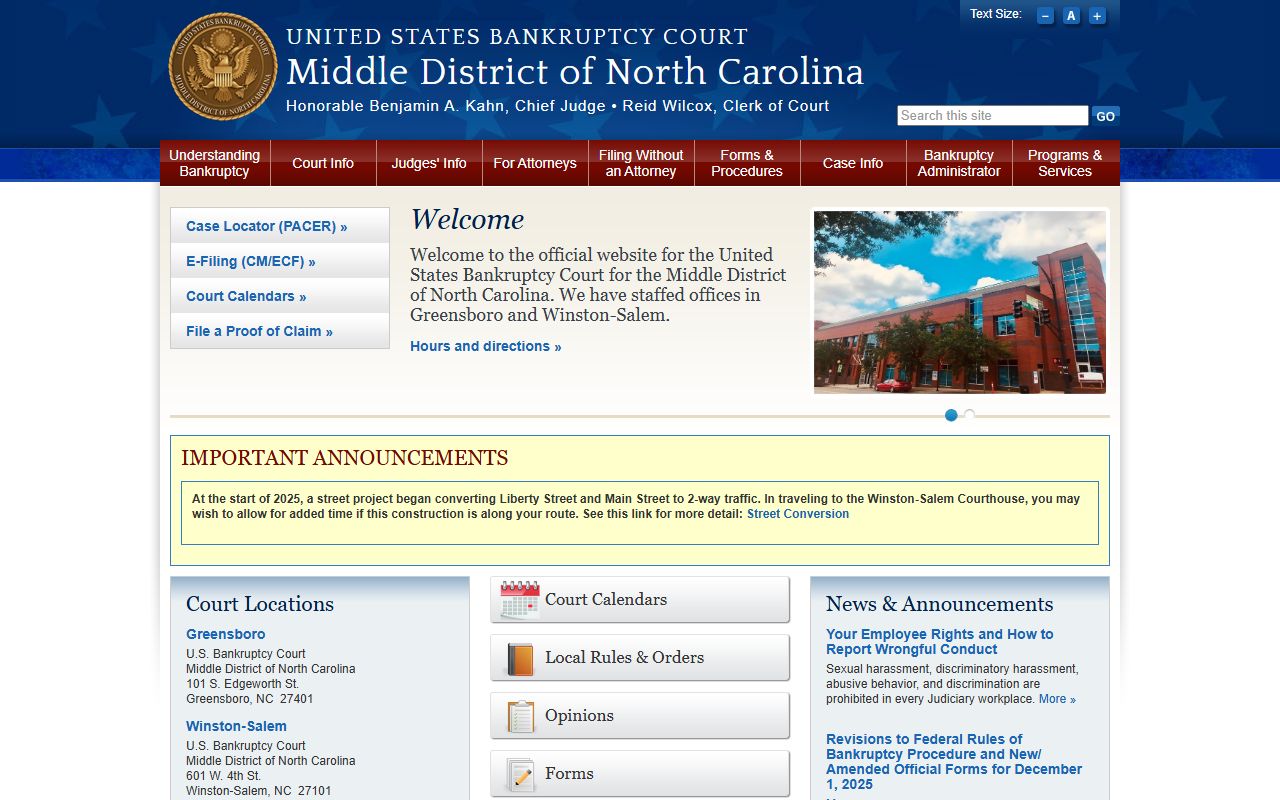
Bankruptcy cases may affect civil judgments or collections, but the bankruptcy docket itself is a federal record.