
What Probate Covers in Stanly County
Probate in Stanly County runs through the Clerk of Superior Court, who acts as ex officio judge of probate. There is no separate Stanly Probate Court page or separate probate judge page in the research file. The local access point is the Stanly County Courthouse at 201 S Second St, Albemarle, NC 28002, with mailing address PO Box 668, Albemarle, NC 28002 and main phone (704) 986-7000.
Stanly County probate records may cover filing a will after death, appointing an executor or administrator, collecting an estate by affidavit where allowed, inventories, creditor notices, claims, accountings, distributions, guardianship matters, and special proceedings. Estate-related real property disputes, partition matters, and foreclosure-related proceedings can also appear when filed as court proceedings. Land and houses do not always pass through the probate estate, because survivorship property, named-beneficiary accounts, life insurance, retirement accounts, joint bank accounts, and annuities may transfer outside estate administration.
The North Carolina estates help topic explains the clerk's role in probate and estate administration.
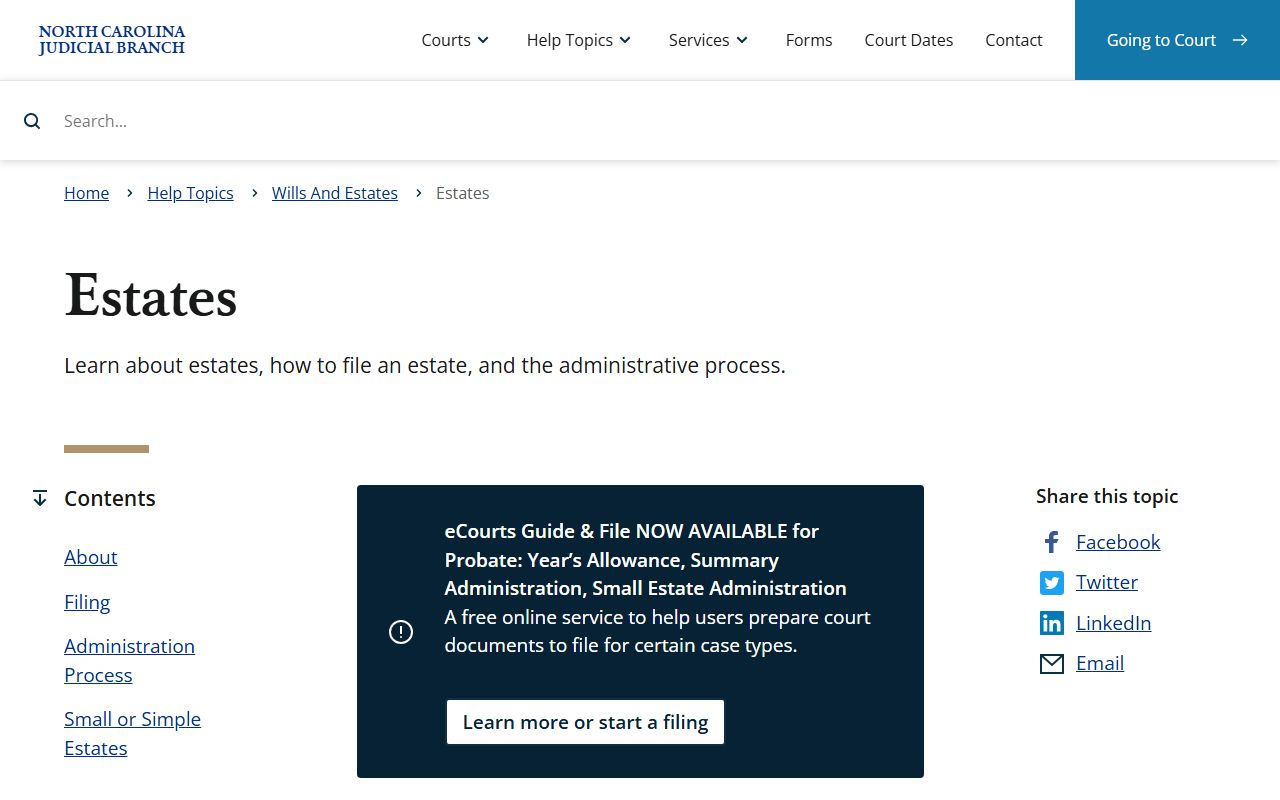
That state guidance is the best starting point for understanding why Stanly County probate records are clerk records rather than a separate court's files.
Probate Terms Defined
Probate terms can make a simple record search hard to read. These words appear in estate files, letters, inventories, and clerk orders. They also help separate a probate record from a deed, tax bill, or private beneficiary transfer that may not be administered through the estate file.
- Testator
- The person who made a will.
- Executor
- The person named in a will and appointed to carry out estate duties.
- Intestate
- Dying without a valid will, which means state succession rules guide distribution.
- Guardianship
- A court-supervised arrangement for a minor or adult who needs legal protection or decision support.
- Conservatorship
- A term often used for management of property or financial affairs, though North Carolina records may use guardianship language.
How to Search Stanly County Clerk of Superior Court as ex officio Judge of Probate
Stanly County is an eCourts county, so public estate and special proceeding information may appear in the North Carolina eCourts Portal. Smart Search can be filtered by location, party, case type, status, and filing date. Probate cases may list a decedent, fiduciary, petitioner, respondent, case events, hearings, dispositions, and financial information when public. Paper files and certified copies remain clerk office functions, especially for older records or records that have not been fully digitized.
- Search the eCourts Portal by decedent name, fiduciary name, case number, or party name, and choose Stanly County as the location when available.
- Use advanced filters for estate, special proceeding, guardianship, filing date, or status if the first search returns too many results.
- Review the public case summary for case number, parties, events, hearings, and financial entries, then note any document or copy needs.
- Visit or contact the Clerk of Superior Court for paper estate files, certified copies, or probate records not available online.
- Use the Judicial Branch public-record request process only for existing records outside the ordinary case-file workflow.
The statewide judicial forms search is the source for official AOC estate forms.
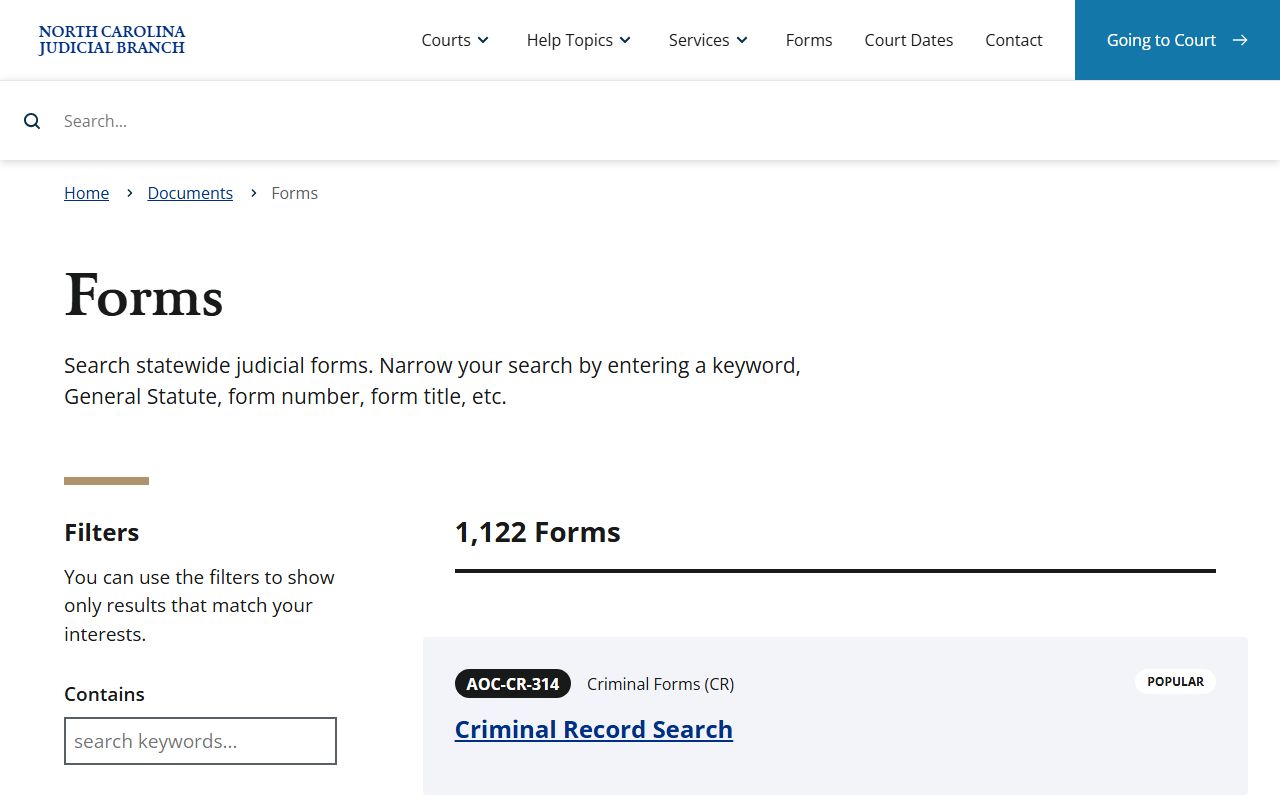
Use official forms for probate filings because the clerk's office cannot treat a loose letter as a substitute for required AOC paperwork.
Stanly County Probate Court Contact
North Carolina's structure makes the contact card simple: the probate office is the Clerk of Superior Court acting as ex officio judge of probate. The same courthouse access point handles wills after death, estate administration, guardianship filings, public terminal searches, and copy requests. For probate records, avoid sending marriage certificate or deed questions to the clerk; those are Register of Deeds matters unless a court proceeding has been filed.
Clerk of Superior Court as ex officio Judge of Probate
Stanly County Courthouse
201 S Second St
Albemarle, NC 28002
(704) 986-7000
Monday-Friday, 8:30 AM-5:00 PM
Stanly County Probate Fees
Probate fees are set through North Carolina court-cost rules, not a separate Stanly County probate court schedule. The research file did not locate a Stanly-specific probate fee table, so the safest source is the current court-costs publication. The official court-costs page says fees are set by statute, mostly Chapter 7A, Article 28, and collected by the courts. Certified copies and ordinary court-record copies also carry miscellaneous clerk fees in that current chart.
| Item | Amount |
|---|---|
| Estate and probate filing costs | Check the current North Carolina court-costs chart |
| Special proceedings | Check the current North Carolina court-costs chart |
| Certified court-record copies | Miscellaneous clerk fee applies under current chart |
| Plain court-record copies | Miscellaneous clerk fee applies under current chart |
| Public-record request copies | Copy charges may apply for existing records |
The current court-costs publication is the official fee source for estates and special proceedings.
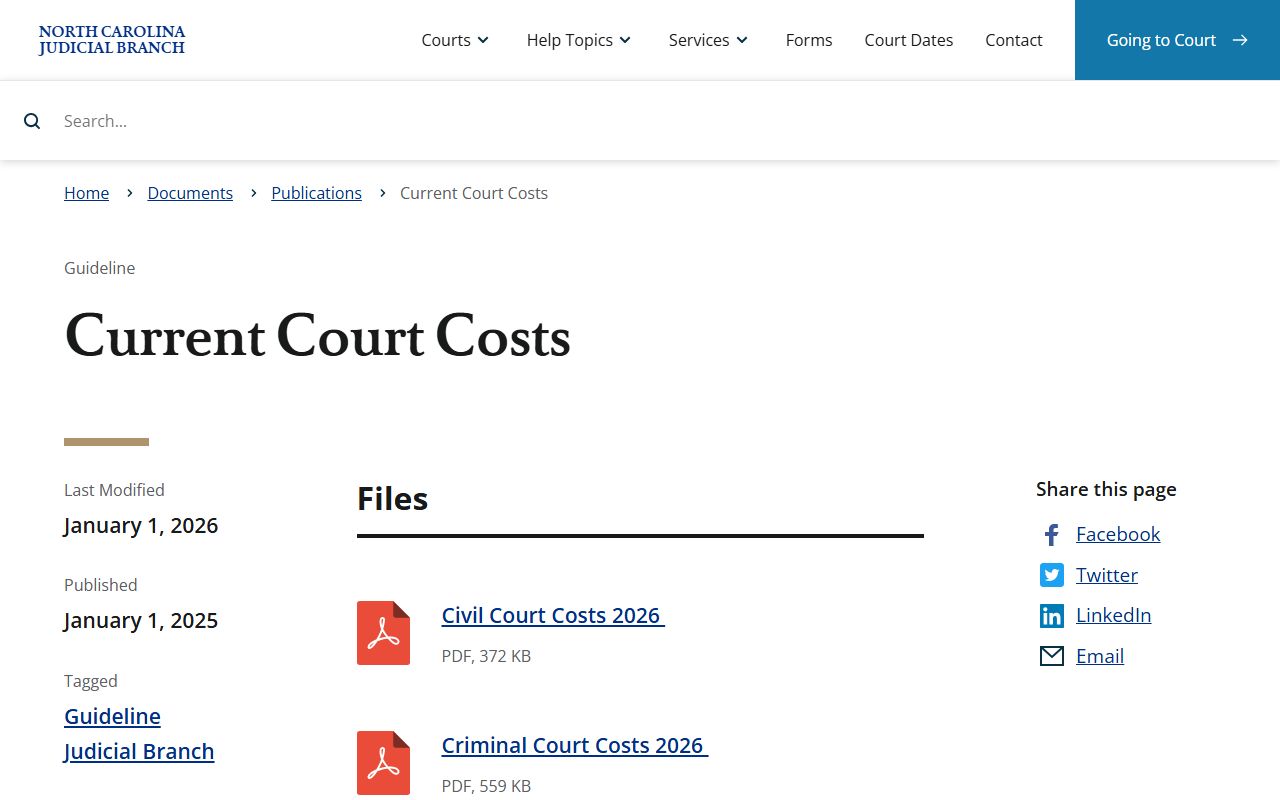
Because probate fees can change by statute, the current chart should control over older saved copies or nonofficial estimates.
What Stanly County Probate Records Show
A public estate file may contain the original will after death, application materials, oath, letters testamentary or letters of administration, inventory, creditor notices, claims, accountings, receipts, orders, and closing documents. Portal case summaries may show case number, case type and status, decedent or party information, fiduciary information, causes or actions, events, dispositions, hearings, and financial information. Paper files may be richer than the online summary.
Guide & File may help with probate filings such as Year's Allowance, Summary Administration, and Small Estate Administration. It does not replace the clerk's authority to review filings or issue letters. If a filing concerns real property, family conflict, claims, or an unclear will, the public record may show the case path but not answer what a party should do next.
The Stanly Register of Deeds search environment is separate, but the Courthouse Computer Systems Stanly ROD page can matter when an estate search points to recorded land or vital records.
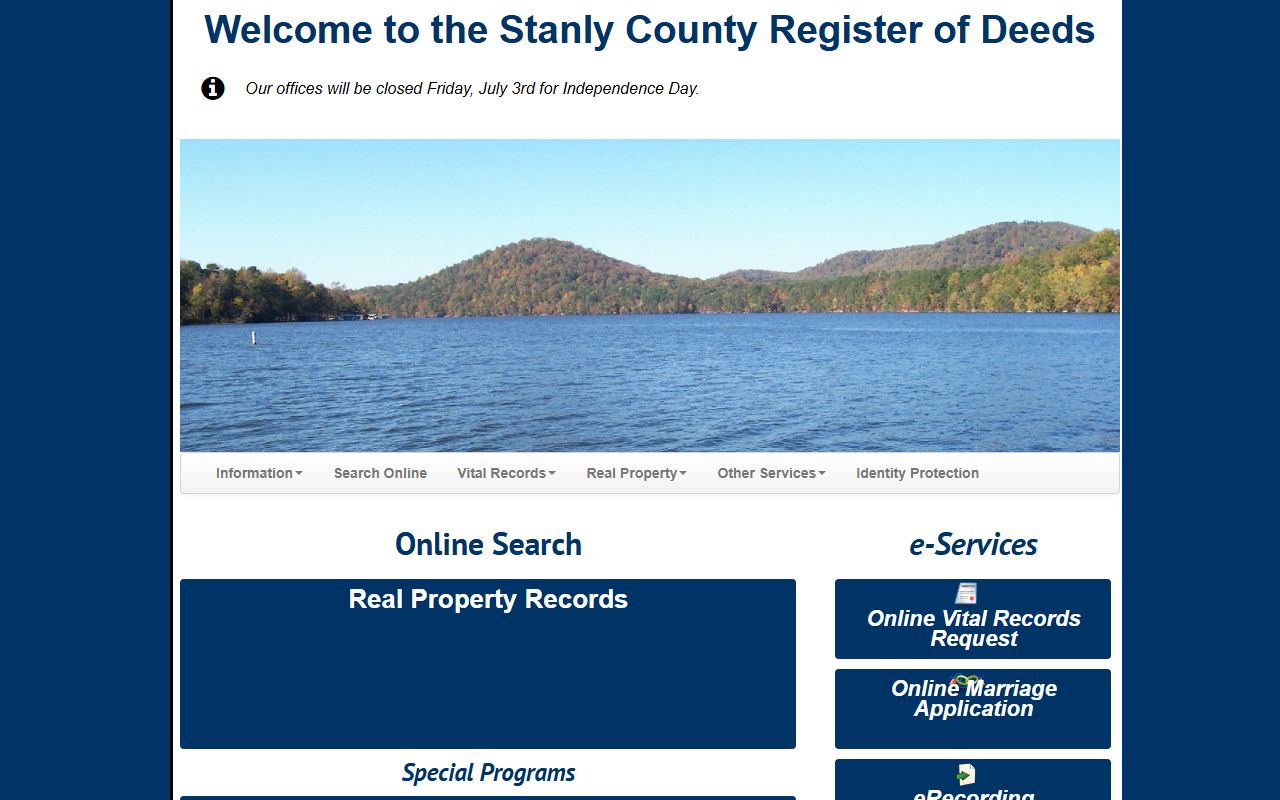
Probate files and land records often intersect, but they are kept by different offices unless a court proceeding includes the real property issue.
Restricted Stanly County Probate Records
Not every probate-related file is open in full. Restricted details may include minor information, financial account numbers, confidential addresses, sealed guardianship matters, mental-health proceedings, and protected personal identifiers. Juvenile court records are restricted under G.S. 7B-3000, and mental-health proceedings are treated as confidential in Judicial Branch guidance. Portal registration alone does not grant elevated access to nonpublic material.
A filed will becomes public after death when it is part of the clerk's record, and a person may view a public record or request a copy for a fee. A private will before death is not a public probate record. If a public search does not show a file, use the clerk's public terminals, the paper-file counter, or a case-specific question to the Clerk of Superior Court before assuming no record exists.